

By Euan Wood
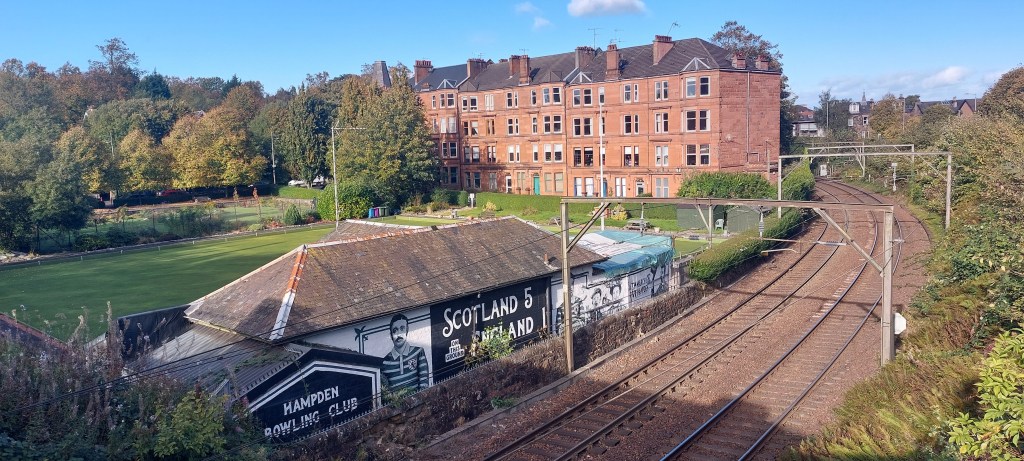
The famous Hampden steps have witnessed a plethora of spectacular sights over the years, with players leaving as legends, legacy’s immortalised and sequential captains borne aloft a trophy that celebrates its 150th anniversary this week.
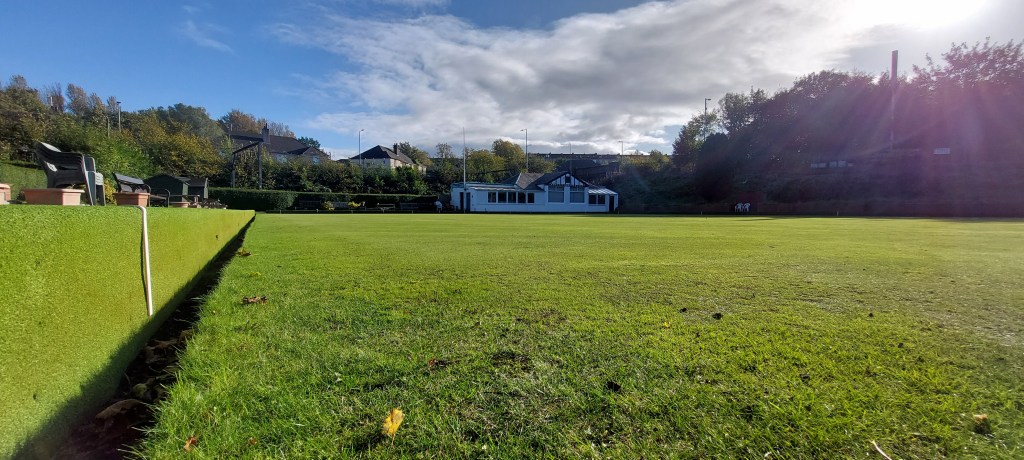
From the blades of grass at the now historic Hampden bowling club, two clubs cemented themselves at the epicentre of association football history, as Renton and Kilmarnock contested the first-ever Scottish Cup match in Mount Florida 150 years ago.
Eventual two-time Scottish Cup champions and founding members of the Scottish Football League, Renton FC based in West Dunbartonshire, defeated the Ayrshire club 2-0 on the 18th October 1873 at Hampden Park before suffering a Semi-Final defeat to eventual winners of the inaugural Scottish Cup, Queens Park.
“The beginning of the Scottish Cup really goes to the success of the Scotland-England match in 1872 – the world’s first international football match,” Richard McBrearty, Curator at the Scottish Football Museum said.
“Queens Park organised the game and within about four months of the first international match, they call the meeting in March 1873 to create the Scottish Football Association and one of the first things they do is institute the Scottish Cup competition.”
Both Renton FC and Kilmarnock were two of 16 clubs who initially entered the competition – alongside namely Clydesdale, Dumbreck, Eastern, Granville, Vale of Leven, Third Lanark Rifle Volunteers, Alexandra Athletic, Blythswood, Callander, Dumbarton, Rovers, Southern, Western and Queens Park – however only 14 sides would compete following two withdrawals prior to the maiden fixture.
However, the legacy of some of those early participants resonated strongly with other working-class sides and prompted the development of football across numerous communities in Scotland.
“There are three clubs in Dunbartonshire who’d go on to be very important in the early history of Scottish football – Renton, Dumbarton and Vale of Leven,” McBrearty outlined.
“They’re working-class, now at this time at the early development of association football, whether in Scotland or England, largely you’d be looking at middle-class membership.
“So, to have Renton so early on involved in the competition and Kilmarnock being very much a middle-class club at that time, certainly would inspire other people from working-class backgrounds to galvanise and form their own clubs.
“Teams like Renton, that’s the working-class element of association football and that’s what makes the West of Scotland so important in the explosion of football and that’s what changes the future direction of the game.”
The English FA Cup may have preceded the Scottish alternative by two-years, however following Aston Villa’s 1894-95 title victory, the original FA cup trophy was stolen from a local shop in Birmingham – never to be recovered. The iconic silverware has since changed its appearance over the years, leaving the original Scottish Cup trophy, the oldest active trophy in world football.
However, whilst England may retain the oldest competition in the history of the game, Scotland played an integral part in its foundation.
“Whilst the English FA cup is the oldest football tournament in the world, Queens Park were members of the London Football Association and actually paid a Guinea into creating the FA Cup tournament and the trophy,” Lindsay Hamilton, Business Owner and Head Tour Guide at the Glasgow Football Tour noted.
“We might not have the oldest tournament, but we do have a massive part to play in that in terms of Queens Park Football Club and the Scottish connection.
“These Scots then went around the world and showed everybody how to play football, they taught them how to play, we created the first unified association, the world’s first league system in terms of being under the same rules and association with every member club. It’s huge, and it is something I think we should all be very proud of.”
The Hampden bowling club sits proudly on the site of unarguably the most decorated and fundamental location in the development of the modern game.
The first Hampden Park is acknowledged across the globe for its iconic influence in the development of association football. The world’s first purpose-built football stadium is of historical significance, with the Hampden Bowling Club globally recognised as the birthplace of the emerging Scots ‘passing game.’
A movement that transcended throughout the continents and permanently reshaped football into the Scottish identity we recognise today.

The Scottish Cup is no exception, with the site regarded as the origin of the oldest trophy in association football. The one distinct connection between these historical moments is a city shrouded in football folklore – Glasgow.
“Glasgow’s absolutely underrated in terms of its football history and heritage, we are completely unique,” Hamilton explained.
“We definitely capture the imagination of the football connoisseur and I think people who come from Glasgow or Scotland know there is some sort of magic in this city.
From the Southside of Glasgow, the worlds first purpose-built football stadium in Hampden Park is closely followed by the oldest continuous football club in Scotland, Queens Park. The worlds first black international football player, Andrew Watson, who captained Scotland at Hampden, is celebrated with murals just South of the River Clyde.
The first-ever international tie at the West of Scotland Cricket Ground in Partick, where Scotland hosted England in front over over 4000 spectators, just scratches the surface of Scotland’s influence on the modern game.
“Glasgow is the greatest footballing city in the world and Scotland is the greatest footballing nation in the world in terms of what we’ve given the game and where we’ve taken the game and how we’ve spread the word around the world,” Hamilton emphasised.
“We’re incredibly fortunate to come from where we come from. There’s huge groundbreaking, world-shaking stories; stuff that people won’t think about, and it happened here in this city. Hugely important and definitely underrated at times, but we are unrivalled, and I can say that with absolute certainty.”
To commemorate the significant milestones, iconic stories and accolades that have built the foundations of one of football’s most illustrious competitions, the Hampden museum unveiled a revitalised exhibit to celebrate the legacy of the Scottish Cup.

“One of the biggest issues we had was that the Scottish Cup was in the first history galley, McBrearty said.
“The problem we had was people would walk into the museum, virtually the first thing you would see, walk past it and that was it. “There was nothing to say this is the oldest national football trophy in the world. Its sheer importance even today its still the big finale to the season. So, we always knew it was important to try and do it justice by creating a galley just devoted to the competition and to the trophy itself.”
Keen to find out more about our National trophy? Listen to our radio report where we run through some of the must unique and iconic stories in the history of the Scottish Cup.
Categories: Europa League, Europe, Football, Football Fans, Glasgow, Heritage, Scottish Cup, Scottish Football, Uncategorized


 UWS Newsroom